
Most rooming house content online gives you a headline yield and a "from" price. I wanted to show what a real project looks like, so this rooming house case study shares the real numbers from my own five-bedroom rooming house in Kallangur, in the City of Moreton Bay.
I don't just advise clients on this strategy. I've bought the site, managed the subdivision, paid the infrastructure charges and leased the rooms. Everything below comes from my own project spreadsheet.
Why I Built a Rooming House
Like a lot of investors, my portfolio was built mostly for capital growth. That works over the long term, but negatively geared properties cost money to hold every year.
I built this rooming house to balance that out. The goal was a cash flow asset that pays its own way, so the rest of the portfolio can keep growing without draining my income.
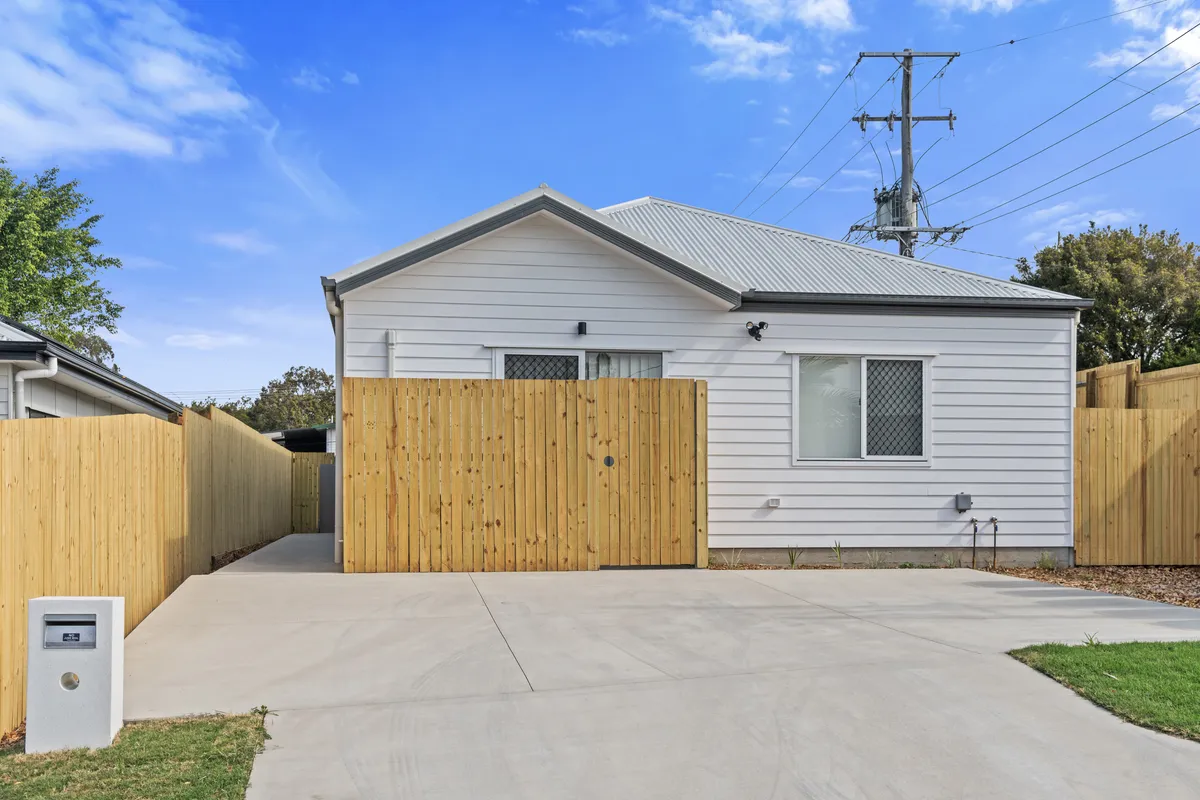
The Site: Building a Rooming House in Moreton Bay
A colleague and I bought an established house on a block in Kallangur together, with each of us paying $472,500 for our share. The plan: demolish the existing house, subdivide the land into two lots and build a five-bedroom rooming house on mine.
Because we bought and subdivided together, we shared costs like demolition and infrastructure connections. All the figures below are my share.
As a Moreton Bay rooming house site, Kallangur suited the strategy because it has rail access on the Redcliffe Peninsula line, is close to the UniSC Moreton Bay campus at Petrie and land was still well priced compared with Brisbane's middle ring.
There's also a clear gap in supply. Only around 3% of all dwellings in Moreton Bay are one-bedroom, and when I searched for one-bedroom rentals in Kallangur, there were very few available. For tenants who want their own space at a lower price, a private room fills that gap.
Milestone | Date |
Settled on the site | November 2025 |
Existing house demolished | December 2025 |
Slab poured | February 2026 |
Build completed | September 2026 |
Settlement to completion took around 10 months. The construction phase itself was about 6.5 months from slab.
Honestly, the rooming house build process feels slow. There are far more moving parts and intricacies than a standard house, from Class 1b compliance to water and sewer approvals. Build that into your expectations and your holding cost budget.
Cost item | Amount |
Purchase price (my share) | $472,500 |
Stamp duty | $14,963 |
Legal, conveyancing, registration and settlement | $4,548 |
Demolition and site clearing | $18,961 |
Subdivision (water, sewer, infrastructure charges, surveying) | $81,379 |
Rooming house build | $566,700 |
Solar variation | $3,300 |
Holding costs, furnishing, NBN, loan and valuation fees | $13,623 |
Total project cost | approx. $1,176,000 |
The costs that surprised me
The subdivision line is the one to watch. Including demolition, my subdivision costs came to $100,340, and around $64,000 of that was infrastructure charges from council and Unity Water. Add sewer connection ($8,529), water connection ($5,212) and approvals, and you can see why I tell every client to get these quoted before they buy.
Furnishing was the opposite. I fitted out one room and the shared areas for $2,828 by mixing Marketplace finds with Kmart, Big W and Bunnings. You don't need designer furniture to rent a good room.
Want numbers like these run on your site before you buy? Talk to Yield Street Property Buyers.
The Income
The house has five rooms. I furnished one and left the other four unfurnished, in the hope that tenants who move their own furniture in would stay longer and be less transient. So far it's worked: within seven days I had three rooms filled, with applications pending on the other two.
Income stream | Annual (projected) |
2 rooms at $465 per week | $48,360 |
3 rooms at $450 per week | $70,200 |
Total rental income | $118,560 |
These figures are the agreed weekly rents over a full 52 weeks. Vacancy is allowed for in the running costs below.
Running Costs
Expense | Annual |
Property management | $9,129 |
Insurance (building and landlord) | $5,735 |
Council rates | $4,000 |
Land tax | $1,535 |
Cleaning and gardens (common areas) | $1,300 |
Water | $3,000 |
Electricity (landlord-paid) | $2,000 |
Repairs and maintenance | $2,000 |
Internet | $1,500 |
Miscellaneous and vacancy allowance | $1,500 |
Total running costs | $31,699 |
Rooming houses cost more to run than a standard rental. You typically pay the power, internet and water, and you need someone looking after the common areas. For maintenance, I found a bundled site services contractor more cost-effective than a tenant caretaker arrangement.
Rooming House Returns
Measure | Result |
Gross yield (total rental income ÷ total project cost) | approx. 10.1% |
Net yield before interest (after running costs) | approx. 7.4% |
As-if-complete value | $1,450,000 |
Equity created | approx. $274,000 |
These yields are based on the total project cost of around $1,176,000. Compare the yields with a standard Brisbane house rented to one tenant, which typically returns a gross yield of 3% to 4%. The rooming house earns income from five rooms instead of one household.
After interest on the purchase, construction and equity release loans, the property is projected to be cash flow positive by around $5,372 a year, even though the project was largely debt funded. That's exactly the job I built it to do.
On paper, $18,000 a year of depreciation turns that into a taxable loss of $12,628. Because the property is held in a trust, I don't get a negative gearing refund, so the after-tax position is the same $5,372.
What I'd Tell Anyone Building Their First Rooming House
1. Get infrastructure and connection charges quoted before you buy. They were the biggest cost outside the build.
2. Budget for time. Ten months from settlement to completion means ten months of holding costs and interest.
3. Understand both rulebooks. Council planning and the National Construction Code set different limits, and you need to meet both.
4. Set up compliant house rules from day one. Rooming accommodation agreements in Queensland fall under the Residential Tenancies and Rooming Accommodation Act 2008, which has its own rules.
5. Run the numbers on management. Property management and landlord-paid utilities change your net return more than you'd expect.
Our View
This project did what I needed: it turned a single block into a cash flow positive asset with real equity built in. But it wasn't simple, and the margin for error on site selection, charges and holding time is real.
That's why I started Yield Street Property Buyers. Every client project now starts with the lessons from this one.
Want to build a rooming house that pays its own way? Book a free 15-minute discovery call with Yield Street Property Buyers.
This article is general information only and does not constitute financial, legal or taxation advice. Income, yield and value figures are projections from the author's own project model, not guaranteed returns. Rents, costs, valuations and interest rates change, and results on other sites will differ. Always seek independent professional advice before making investment decisions.