I keep a mental list of number pairs that never quite match up in an investor's first conversation with me. For instance, say the rental appraisal says $1,400 a week and the ‘from’ price on the house-and-land package says $650,000. Both numbers are technically true, right? Yet neither of them tells you what the property will cost to own.
If you've been researching high yield property investment in Brisbane, chances are the words ‘rooming house’ have come up more than once, and for good reason: a well-built, well-located rooming house can generate significantly stronger rental returns than a standard house or unit in the same suburb. But before you get swept up in the headline yield figures, it's worth asking the question most spruikers skip over: what does a rooming house cost, upfront and every year after that?
At Yield Street Property Buyers, we're a Brisbane buyers agency that specialises in helping investors get clear on the reality of rooming house and dual-income property investment. This guide lays out the full cost picture, from initial build and approval costs to the ongoing running costs so that you go in with your eyes wide open.
What Is a Rooming House in Brisbane?
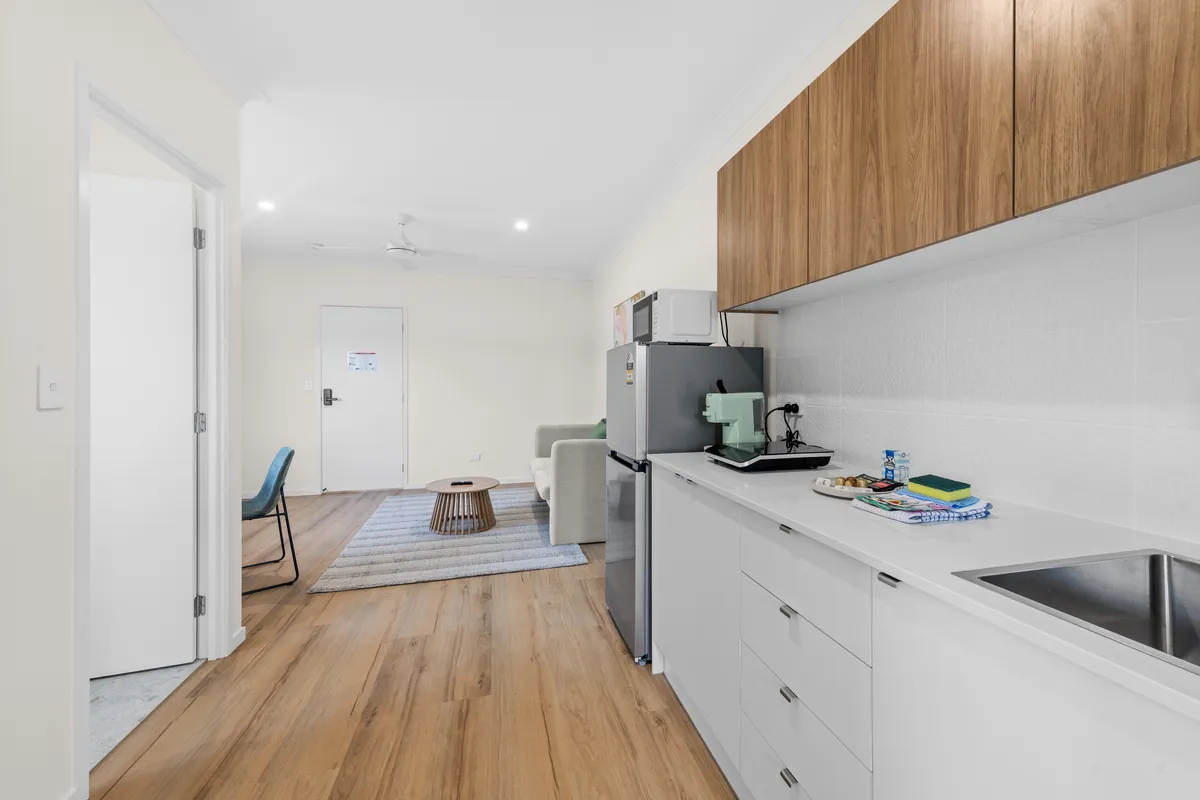
Under Brisbane City Council planning rules, a rooming accommodation dwelling (Class 1B) typically houses up to five unrelated occupants, each with their own lockable room, often including a private ensuite and kitchenette, plus shared common living space. It's a fundamentally different asset class to a standard house-and-land package, which is why the cost structure looks different, too.
A rooming house is essentially five income streams under one roof and one title. It also comes with more moving parts, being approvals, compliance, furnishing and a unique style of property management. Understanding the real costs beyond rental upside can make or break the success of this high-performing asset.'
Rooming House Initial Costs
1. Land Acquisition
Land is usually the single biggest line item. In the Brisbane City Council footprint, established suburban blocks suited to rooming accommodation range significantly in price. As your Brisbane buyers agent, this is where we do most of our heavy lifting; sourcing the right block, in the right catchment, most suitable for the project, without any expensive surprises, rather than pouncing on the first site that happens to be for sale.
Buying land for a rooming house in Brisbane means weighing up catchments, and prices vary meaningfully between councils. At the time of writing, expect roughly:
· Brisbane City Council: from around $800,000 per block, reflecting tighter supply and stronger competition closer to the city
· Moreton Bay City Council: around $650,000 to $700,000 per block, which is why rooming house Moreton Bay projects stack up well on a cost-to-yield basis
· Ipswich City Council: from around $600,000 per block, the most affordable of the three major catchments we work across
2. Design, Construction and Site Costs
Queensland construction costs in 2026 generally sit somewhere between roughly $1,600 and $3,900 per square metre depending on specification, with Brisbane metro builds usually landing at the higher end of that range due to trades demand. For a purpose-built rooming house (five self-contained rooms, shared living, kitchenettes, ensuites), expect your all-in construction cost to be noticeably higher per square metre than a standard family home, because you're effectively building five bathrooms and five kitchenettes instead of one.
In practice, that puts the numbers to budget for at:
Build cost, typically around $550,000 to $600,000 for a five-room rooming house
Demolition of the existing dwelling, generally around $35,000 to $45,000 depending on size, asbestos presence and site access
Site costs, including earthworks, retaining, drainage and services connections, often $10,000 to $50,000+ depending on the site, slope and soil conditions
Council development application and building approval fees, commonly $1,500 to $5,000, though Council will confirm your specific quote after lodgement
QBCC Home Warranty Scheme premium, which applies to any residential construction work valued over $3,300 (realistically every rooming house build) and is generally built into your builder's contract
3. Approvals and Compliance
Rooming accommodation businesses in Brisbane must comply with the Residential Tenancies and Rooming Accommodation Act 2008, and depending on your tenant profile, may require registration under the Residential Services (Accreditation) Act 2002. Some rooming house configurations are accepted development, meaning that there’s no development application required, while others need planning approval. It’s worth getting certifier and planning advice early, as this can be one of the more technical components of the process.
4. Furnishing and Fit-Out
Because rooming house rooms are leased individually and typically furnished, budget for quality furniture packages across all five rooms plus common areas. Why? BMT Tax Depreciation reports the average residential investor is entitled to more than $12,000 in first-year depreciation deductions, and a fully furnished five-room rooming house, with five times the depreciable fixtures, fittings and appliances of a standard rental, is well placed to exceed that average, not just meet it. Well-specified furnishings support faster leasing, lower vacancy and stronger depreciation outcomes, all at once. Speak to a quantity surveyor about a depreciation schedule before you finish fitting the place out, not after.
Furnishing is also one part of the process we handle in house: we can supply and install a complete furniture package for your rooming house in Brisbane, specified for durability and depreciation value rather than showroom appeal, so you aren't coordinating five separate suppliers in the weeks before handover. If you'd rather hand the whole fit-out across, that option is on the table.
5. Stamp Duty and Finance Costs
Stamp duty in Queensland applies differently depending on whether you're buying vacant land (duty on land value only) versus an established dwelling (duty on the full purchase price). Factor in lender fees, valuation costs, and, if you're using a specialist rooming house lender, potentially different loan terms to a standard residential mortgage.
Ongoing Costs of a Rooming House in Brisbane
The upfront number gets all the attention, but the ongoing cost base is what determines your cash flow, as well as whether your net yield actually matches the gross yield you were sold on.
1. Property Management
Rooming house tenancies are more hands-on than a standard single-tenancy rental, with more move-ins and move-outs, more tenant coordination around shared spaces, and specific compliance obligations. Our recommended property managers charge between 7% and 8% of gross rent plus GST, which is a reasonable premium on the 5% to 8% common for standard residential management, given the workload of running five tenancies instead of one.
We've deliberately hand-picked the managers we refer clients to, because rooming house property management in Brisbane is its own discipline: they know the Residential Tenancies and Rooming Accommodation Act 2008 inside out, they understand the compliance obligations that come with rooming accommodation, and they're genuinely good at the day-to-day of it.
2. Council Rates and Land Tax
Rates are charged per property or title in Queensland, not per room, but land tax thresholds can affect your position, particularly if you hold multiple investment properties. Land tax for individuals kicks in once your total taxable landholding in Queensland crosses $600,000, and it's assessed on everything you own in the state combined, rather than property by property as one might expect. Always get personalised advice on your land tax exposure before you buy, especially if this isn't your only investment property.
3. Insurance
A standard Australian landlord insurance policy currently costs around $2,400 a year on average, and premiums for houses rose 3.65% over the past year alone. Rooming house insurance in Brisbane is a different, and significantly more expensive, product than a standard rental policy, given the higher occupant turnover and shared-facility risk profile. It's also a thin market: very few insurers will write cover for rooming accommodation at all, so your choice of policy is far narrower than it would be for a standard dwelling. Expect to pay $6,000+ a year for combined landlord and building and contents cover on a five-room rooming house, against roughly $2,400 for a comparable standard investment property.
Don't assume a standard landlord policy will cover you. Confirm with your insurer, in writing, that the policy specifically covers rooming or boarding accommodation, because a claim being knocked back after the fact is a far more expensive lesson than the premium ever was.
4. Utilities
Depending on your metering setup, you as the owner may be responsible for water, and potentially electricity for common areas or individually metered rooms. Beware, utility costs across five occupied rooms and shared common space are higher than a single-tenancy home, so budget accordingly rather than assuming your tenants will absorb 100% of the cost.
5. Maintenance and Repairs
More bathrooms, more kitchenettes, more wear and tear and more tenants using shared spaces means a rooming house simply has more cogs in the wheel than a standard house. Well-built, quality-specified properties reduce this cost over time, which is one reason we place such heavy emphasis on build quality and fixture selection with our clients, over headline yield.
This is also a strong argument for building new rather than buying an existing dwelling and converting it. We help clients build new rooming houses, and new residential construction in Queensland comes with statutory protection an older home simply doesn't have. Under the Queensland Home Warranty Scheme, structural defects are covered for 6 years and 6 months from the contract date (extending to 7 years where the build takes longer than six months to complete), while non-structural defects must be identified within 6 months of completion and claimed within 7 months. Most builders also carry a 12-month defect liability period from practical completion on top of that. In practical terms, your maintenance exposure in the early years of a new build is materially lower than on a second-hand property, which is worth factoring into your cash flow modelling. Your builder's specific contractual warranties will vary, so read them.
6. Vacancy Allowance
Even in Brisbane's historically tight rental market, it's prudent to model a vacancy allowance across your five rooms rather than assuming 100% occupancy year-round. Tenant turnover in shared or rooming accommodation tends to be higher than standard tenancies, so leasing costs and short vacancy gaps should be built into your numbers from day dot.
That said, turnover is largely a function of tenant selection rather than the asset type. Across our clients' rooming houses we average around 2% break-lease tenancies, which is a very good result in this space, and it comes down to the managers we work with being genuinely rigorous at the application stage rather than filling a room quickly to keep it occupied. It's also worth knowing that unfurnished rooms often hold tenants longer: when someone moves their own furniture in, the friction of moving out again is higher, and you tend to attract tenants looking to settle rather than pass through. Furnished rooms lease faster and depreciate better; unfurnished rooms can deliver longer average tenancies. Which trade-off suits you depends on your target tenant and how you value turnover against depreciation.
What Does Rooming House Ownership Look Like, All Up?
Here's a simplified, illustrative snapshot pulling the ranges above together for a typical Brisbane rooming house build. Every project is different, but this is roughly the shape of it:
Cost Category | Illustrative Range |
Land (per block, by council) | $600,000 – $800,000 |
Construction (per m², 5-room build) | $1,600 – $3,900+ |
Build cost (5-room rooming house) | $550,000 – $600,000 |
Demolition of existing dwelling | $35,000 – $45,000 |
Site costs (earthworks, services, drainage) | $10,000 – $50,000+ |
DA and building approval fees | $1,500 – $5,000 |
QBCC Home Warranty premium | Built into contract (applies above $3,300) |
Furnishing (5 rooms + common areas) | Varies, but factor real depreciable value |
Ongoing: property management | 7% to 8% of gross rent + GST |
Ongoing: rooming house insurance | $6,000+ (landlord + building & contents) |
Ongoing: vacancy allowance | Model realistically |
The point of laying it all out on (or should I say, in) the table like this isn't to talk you out of a rooming house. It's so that when someone shows you an 8% gross yield figure, you can mentally run it through a similar spreadsheet before getting attached.
Why Work with a Brisbane Buyers Agent for a Rooming House Investment?
Rooming house investment is a specialised corner of the Brisbane property market. Site selection, council approval pathways, build specification and property management structure all materially affect your outcome, and getting any one of them wrong can turn an 8% gross yield success story into a 4% net yield reality check.
As a dedicated Brisbane buyers agency, Yield Street Property Buyers works exclusively in the interests of the investor, not the developer and not the builder. We help you:
Identify Council catchment areas suited to rooming accommodation approval
Model and weigh up the true initial costs
Understand your realistic net yield, after every ongoing cost is accounted for
Connect with specialist rooming house property managers, certifiers and builders
Avoid any ‘build to sell’ pitfalls that inflate purchase prices through unsustainable rental guarantees
Ready to Explore Rooming House Investment in Brisbane?
If you're serious about adding a high-yield rooming house to your property portfolio, the difference between a great investment and a costly mistake often comes down to the numbers you didn't see upfront.
Get in touch with Yield Street Property Buyers today, your independent Brisbane buyers agency, for a clear-eyed breakdown of the initial and ongoing costs specific to your budget, target suburb and investment goals: i.e., the whole table. The whole picture. Yours, if you see fit.
This article is general information only and does not constitute financial, legal or taxation advice. Costs referenced are indicative ranges based on current Queensland construction and market data and will vary by site, specification and market conditions. Always seek independent financial, legal and building advice specific to your circumstances before purchasing an investment property.