
Brisbane has become one of the strongest markets in Australia for rooming house investment. Strong population growth, a persistent rental shortage and a real shift toward single-person households have created sustained demand for affordable, well-located rooms across South East Queensland.
Brisbane added 58,200 people in the 2024-25 financial year alone, a 2.1% increase according to ABS data released in March 2026. Brisbane's rental vacancy rate sat at 0.9% in July 2026. This guide brings together what investors need to know before they buy, from council rules through to real yield numbers.
What is a rooming house in Brisbane?
Under Brisbane City Council's City Plan, rooming accommodation is residential accommodation where each resident occupies one or more rooms, doesn't have the whole premises to themselves and shares some facilities, furniture or equipment with other residents.
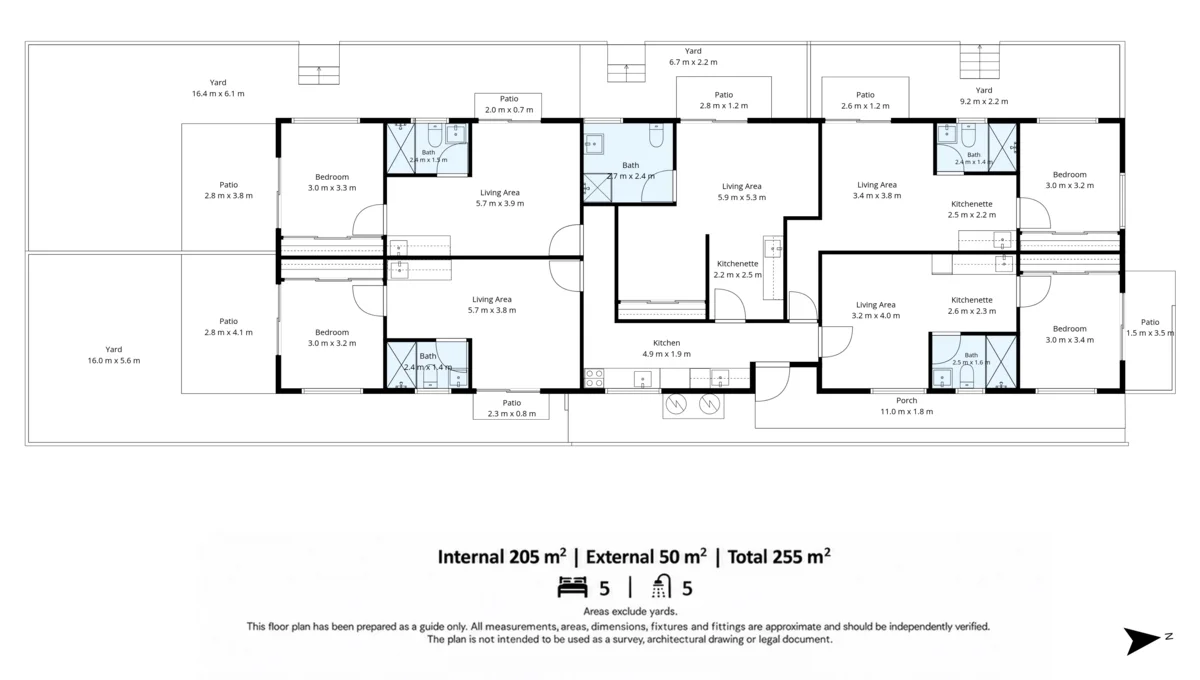
In practice, a new Brisbane rooming house typically houses up to five unrelated occupants. Each has their own lockable room, often with a private ensuite and kitchenette, plus shared common living space. It is five income streams under one roof and one title.
It is a different asset class to a standard house and land package, which is why the cost structure looks different too. It comes with more moving parts: approvals, compliance, furnishing and its own style of property management.
Who lives in a rooming house?
Contrary to the stereotype, most rooming house residents are employed, middle-income single adults looking for affordable, private, self-contained accommodation close to work. Nurses, aged care staff, hospitality workers, tradespeople and other shift workers are a natural fit, along with students and key workers.
The demand is structural. At the 2021 Census, 26% of Australian households were one person, and the ABS projects that share will reach 28% by 2046. Lone-person households are projected to rise from 2.6 million in 2021 to as many as 4 million by 2046. Read more on who actually rents a room.
How a rooming house is classified
Most small rooming houses are Class 1b buildings under the National Construction Code, which allows up to 12 residents and a floor area up to 300m². Council's planning limits and the building code limits are different numbers, and both must be met. Our guide to Class 1a and Class 1b dwellings explains the difference.
Brisbane City Council rules
Within the Brisbane City Council area, a rooming house is generally capped at five lettable rooms, five unrelated occupants and a total floor area of around 300m². Depending on the zoning of your site, a rooming house falls into one of three levels of assessment.
| Level of assessment | What it means | What to expect |
|---|---|---|
| Accepted development | No planning approval is required, provided the design meets the acceptable outcomes in City Plan. | The most direct pathway. Building approval is still required. |
| Code assessable | A development application is needed, assessed against a clear, published set of criteria. | No public notification. |
| Impact assessable | A development application with public notification, where neighbours can make submissions. | A longer process, more common in low-density or character zones. |
The five room figure is the threshold for accepted development, not a hard ceiling. Larger rooming houses are possible with council approval. Getting this assessment right before you commit to a site is the difference between a straightforward approval and months of delay, so confirm your development pathway before the numbers get run.
State rules that apply everywhere in Queensland
Council planning is only one layer. These state rules apply whether you build in Brisbane, Moreton Bay, Logan or Ipswich:
- Tenancy law. Residents are generally covered by rooming accommodation agreements under the Residential Tenancies and Rooming Accommodation Act 2008, which has its own rules for house rules, entry and notices.
- Fire safety. Class 1b buildings carry additional fire safety requirements, including interconnected smoke alarms.
Other South East Queensland councils
The rules above are specific to Brisbane City Council. Rooming house rules are not uniform across South East Queensland. Brisbane, Moreton Bay, Logan, Ipswich and Redland each apply their own planning scheme, and a site that works in one council area can face a far harder approval path a few streets away in the next.
Moreton Bay is the clearest example. Its planning scheme defines rooming accommodation in much the same way as Brisbane, but it does not mirror Brisbane's accepted development pathway. Most sites sit in the General residential zone, where rooming accommodation is listed only within 800 metres walking distance of a centre or, in some precincts, a train station. Overlays and buffers can rule a site out, and water and sewer are handled by Unity Water, not council. Our guide to rooming house rules in Moreton Bay walks through it.
We source sites in Brisbane only. Our partner packages cover other South East Queensland council areas, so always confirm the requirements for the council your site sits in.
How much does a rooming house cost in Brisbane?
Costs vary from site to site, but investors building a new rooming house should budget for three components: the land, the build and the compliance costs specific to rooming accommodation, including fire separation, exits and Class 1b certification. Skipping the compliance line is the most common mistake we see.
Here is an illustrative snapshot for a typical five-room build. Every project is different, but this is roughly the shape of it.
| Cost | Illustrative range |
|---|---|
| Land, per block | $600,000 to $1M |
| Build cost, five-room rooming house | $550,000 to $750,000 |
| Demolition of an existing dwelling | $35,000 to $45,000 |
| Site costs (earthworks, services, drainage) | $10,000 to $50,000+ |
| Development application and building approval fees | $1,500 to $5,000 |
| QBCC Home Warranty premium | Built into the building contract |
| Furnishing, five rooms and common areas | $30,000+ |
| Ongoing: property management | 7% to 8% of gross rent plus GST |
| Ongoing: rooming house insurance | $6,000+ a year |
Land is usually the single biggest line, and prices vary meaningfully between councils.
A rooming house costs noticeably more to build than a standard family home of the same size, because you are effectively building five bathrooms and five kitchenettes instead of one. Stamp duty, lender fees and valuation costs sit on top. For the full picture, including every ongoing cost, read what a rooming house costs in Brisbane.
What does a rooming house earn?
A rooming house earns income from five rooms instead of one household. That is the whole strategy: this is a yield strategy, not a growth strategy. The yield is the return and growth is the bonus.
| Property | Gross yield |
|---|---|
| Standard Brisbane house rented to one tenant | Typically 3% to 4% |
| Well-run rooming house, rooms let individually | Generally 8% and above |
Take a hypothetical but realistic scenario: an investor builds a compliant five-room rooming house in Brisbane for around $1.4 million all in, land and build included, and lets each room for $450 a week. That's $2,250 a week, or $117,000 a year in gross rent, a gross yield of about 8.4% on the total cost.
Gross yield is the headline, not the result. Rooming houses cost more to run than a standard rental, so when someone shows you an 8% gross yield figure, run it through the full list of costs before you get attached. Actual returns always depend on location, build cost and occupancy, which is why every recommendation we make is backed by documented numbers.
Case study: my own rooming house
This section is written by Lauren Jones, in the first person.
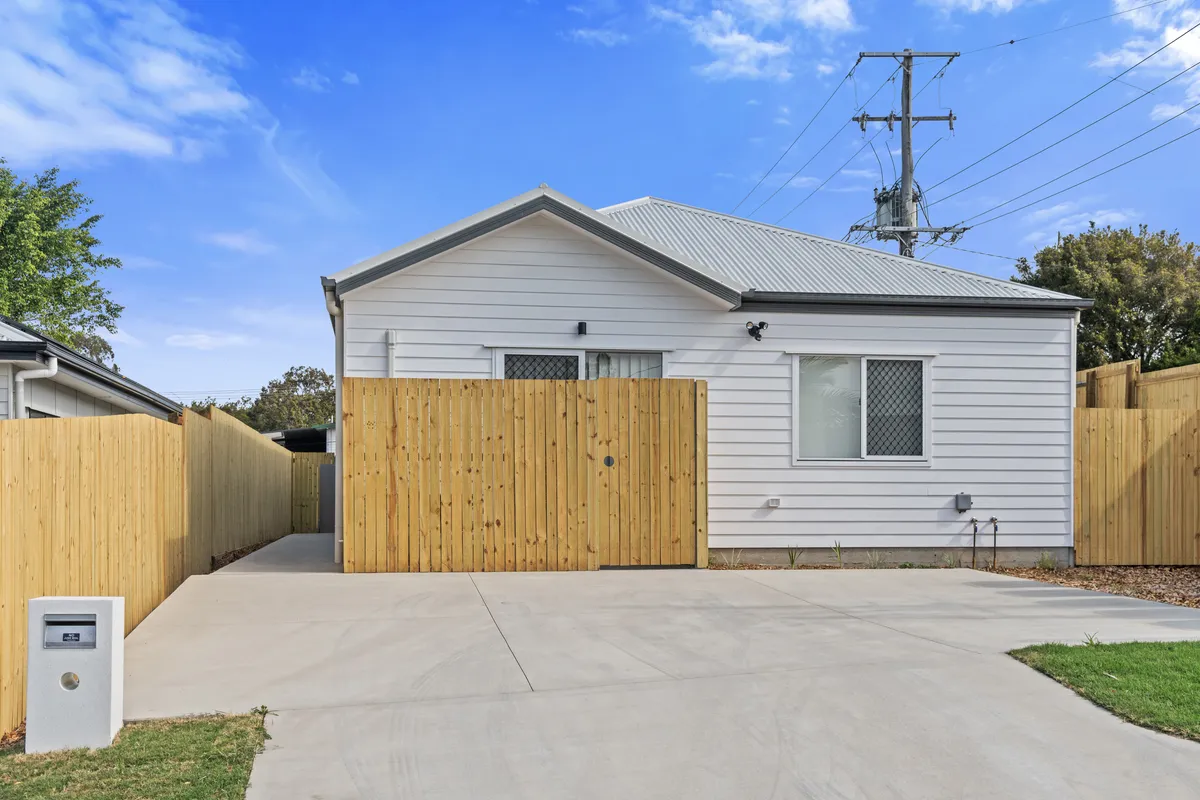
I don't just advise clients on this strategy. I built my own five-bedroom rooming house in Kallangur, in the City of Moreton Bay, north of the Brisbane City Council boundary. I bought the site, managed the subdivision, paid the infrastructure charges and leased the rooms. Everything below comes from my own project spreadsheet.
A colleague and I bought an established house on a block together, with each of us paying $472,500 for our share. We demolished the house, subdivided the land into two lots and I built on mine. We settled in November 2025, demolished in December, poured the slab in February 2026 and completed in September 2026. Settlement to completion took around 10 months.
| Cost item | Amount |
|---|---|
| Purchase price (my share) | $472,500 |
| Stamp duty | $14,963 |
| Legal, conveyancing, registration and settlement | $4,548 |
| Demolition and site clearing | $18,961 |
| Subdivision (water, sewer, infrastructure charges, surveying) | $81,379 |
| Rooming house build | $566,700 |
| Solar variation | $3,300 |
| Holding costs, furnishing, NBN, loan and valuation fees | $13,623 |
| Total project cost | approx. $1,176,000 |
The subdivision line is the one to watch. Including demolition, my subdivision costs came to $100,340, and around $64,000 of that was infrastructure charges from council and Unity Water. Furnishing was the opposite: I fitted out one room and the shared areas for $2,828.
| Measure | Result |
|---|---|
| Rent: 2 rooms at $465 a week and 3 rooms at $450 a week | $118,560 a year (projected) |
| Running costs | $31,699 a year |
| Net yield before interest | approx. 7.4% |
| As-if-complete value | $1,450,000 |
| Equity created | approx. $274,000 |
Within seven days I had three rooms filled, with applications pending on the other two. After interest on the purchase, construction and equity release loans, the property is projected to be cash flow positive by around $5,372 a year, even though the project was largely debt funded. That's exactly the job I built it to do.
What I'd tell anyone building their first rooming house:
- Get infrastructure and connection charges quoted before you buy. They were the biggest cost outside the build.
- Budget for time. Ten months from settlement to completion means ten months of holding costs and interest.
- Understand both rulebooks. Council planning and the National Construction Code set different limits, and you need to meet both.
- Set up compliant house rules from day one.
- Run the numbers on management. Property management and landlord-paid utilities change your net return more than you'd expect.
Income, yield and value figures are projections from my own project model, not guaranteed returns. The full breakdown is in my Kallangur rooming house case study.
Financing a rooming house
A Class 1b rooming house can look like a normal home from the street, so it is easy to assume the finance will work like any other investment property. It rarely does. The finance conversation needs to happen before you buy land, not after.
- Fewer lenders will do it. Many mainstream banks decline rooming houses outright or apply tight policy limits around room numbers and property type.
- Rental income is discounted. Lenders rarely count 100% of room rent when assessing whether you can service the loan, and the discount varies widely between lenders.
- Lower loan to value ratios. You usually cannot borrow as high a percentage of the value as you could on a standard investment.
- The cheapest rate is rarely the answer. The lender that suits your project depends on policy, valuation and location.
In our experience most rooming house investors need around 30% of the total project cost in deposit or usable equity. For rooming houses, we generally suggest $400k or more in capital.
Valuation is where plans come unstuck. A standard house is valued mostly on comparable sales, while some lenders instruct valuers to consider the income the completed rooming house will produce. If the lender's valuation comes in lower than your plan, the loan shrinks and you cover the gap in cash, sometimes halfway through the build.
Location matters to lenders too. The same design on two different blocks can get two different answers, which is why we check site selection and lender appetite together. Read our guide to choosing a mortgage broker for a rooming house, and how interest rates affect rooming houses.
Rooming houses and tax in 2026
The negative gearing and capital gains tax reforms announced in the 2026-27 Federal Budget passed both houses of Parliament on 25 June 2026 and are now law. From 1 July 2027, established residential properties purchased after 7:30pm AEST on 12 May 2026 will no longer be able to offset rental losses against salary or other personal income.
Eligible new builds are treated differently. Under the 2026 tax reforms, eligible new builds can still be negatively geared and can keep the 50% capital gains tax discount. A new build on vacant land generally qualifies, and so does a knockdown that adds supply, such as two rooming houses where there was one house. Replacing one house with one rooming house doesn't. We confirm the position with your accountant before you buy.
Depreciation
Depreciation is one of the quiet advantages of a new rooming house. The building itself is generally deducted at 2.5% of the construction cost each year over 40 years. Plant and equipment, such as appliances, air conditioners, hot water systems and carpets, is claimed over each item's effective life.
A rooming house contains multiple kitchenettes and bathrooms, which means more fixtures, fittings and plant and equipment to depreciate. As an illustration only: on Lauren's $570,000 build, total depreciation benefits are $21,199 in the first year, diminishing to around $14,000 after 12 years.
Since 1 July 2017, investors generally cannot claim depreciation on second-hand plant and equipment in a residential rental property. Build new and every item is new to you. A quantity surveyor prepares the schedule your accountant uses each year. Read more on rooming house depreciation and building a portfolio that pays for itself.
We treat depreciation as a bonus on top of the yield, not the reason to buy. This guide is general information, not tax advice.
Running a rooming house
The upfront number gets all the attention, but the ongoing cost base is what determines your cash flow. Rooming houses cost more to run than a standard rental.
- Property management. Our recommended property managers charge between 7% and 8% of gross rent plus GST. Rooming house management is its own discipline, with more move-ins and move-outs and specific compliance obligations.
- Insurance. Very few insurers will write cover for rooming accommodation. Expect to pay $6,000+ a year for combined landlord and building and contents cover on a five-room rooming house, against roughly $2,400 for a comparable standard investment property. Confirm in writing that the policy covers rooming accommodation.
- Utilities. You typically pay the power, internet and water.
- Maintenance. More bathrooms, more kitchenettes and more tenants using shared spaces mean more wear. A new build comes with statutory protection under the Queensland Home Warranty Scheme that an older home doesn't have.
- Vacancy. Model a vacancy allowance across your five rooms rather than assuming 100% occupancy all year.
Turnover is largely a function of tenant selection. Across our clients' rooming houses we average around 2% break-lease tenancies, which comes down to the managers we work with being rigorous at the application stage. We recommend a minimum 12 month lease term.
Furnished rooms lease faster and depreciate better. Unfurnished rooms can deliver longer average tenancies, because someone who moves their own furniture in is less likely to move out again quickly. See our guide on whether to furnish a rooming house.
Choosing a site
Not every block works. Choosing the site is where the project is won or lost. A site can pass every standard buyer check and still fail as a rooming house. The strongest sites share a few features:
- Proximity to hospitals, universities, transport corridors or major employment hubs, where tenant demand is highest. Brisbane's labour force reached almost 850,000 people as of March 2026.
- Zoning that supports accepted or code assessable development, reducing approval risk.
- A block size and shape that can comfortably accommodate the room count and parking requirements without triggering impact assessment.
- Clear of overlays that complicate approval, including flood, character and bushfire.
- Sewer, stormwater and service connections that have been checked, with infrastructure and connection charges quoted before you buy.
- A postcode your lender will fund.
If you already own a property, read our guide to a knockdown rebuild for a rooming house before you call a demolition contractor. A straight one-for-one swap rarely stacks up.
Is a rooming house right for you?
A rooming house suits investors who:
- have strong equity and can fund a larger deposit
- want cash flow to balance a negatively geared portfolio
- are comfortable with a build timeline and the moving parts that come with it
- will use a specialist rooming house property manager.
It is not the right fit if you need a low-deposit or quick-turnaround investment. High yield doesn't mean risk free either: finance, compliance and resale all work differently to a standard home. Read who rooming house investing is really for and our plain account of the risks of rooming house and dual occupancy investment.
If one rent per title isn't enough but a rooming house is more than you want to take on, compare dual key, dual occupancy and duplex.